What to Check Before Fishing During Hunting Season
A practical checklist for fall shore and wade anglers sharing public land and water access with hunters during hunting season.
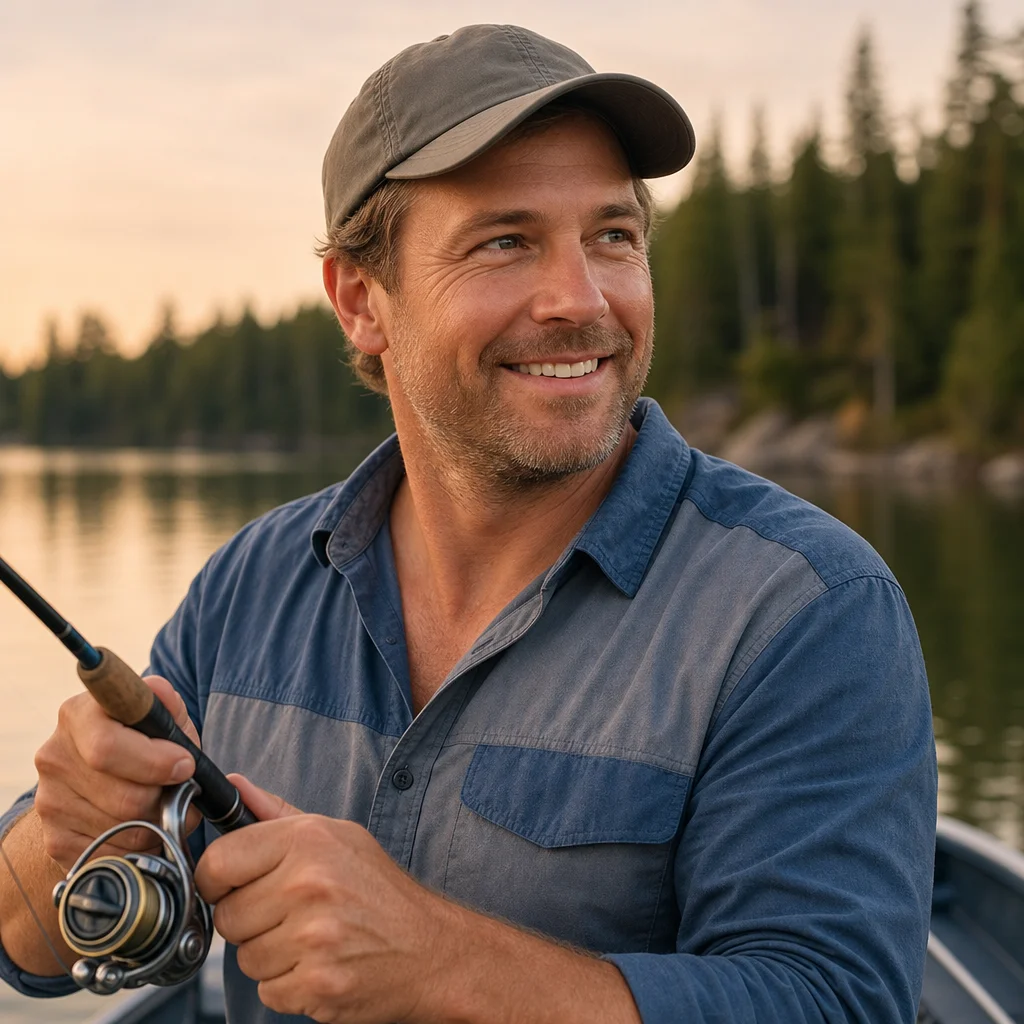
Fall can be some of the best fishing of the year. Cooler water often puts fish on the move, crowds thin out, and a quiet stretch of bank can feel like a reward for getting out early.
That same quiet access may be shared with hunters, though. A trailhead, wildlife-management area, marsh, or river-bottom parking lot can have very different rules and traffic patterns once hunting seasons open. I don’t treat that as a reason to stop fishing. I treat it as a reason to plan the trip more carefully before I lace up wading boots or carry a rod down a wooded trail.
Here’s what I check before fishing during hunting season.
Start with the exact property, not just the body of water
A river, creek, or lake may run through several kinds of land: a state park, a wildlife-management area, a national forest, a county access site, or private property. Fishing may be allowed along the water while the surrounding land has separate hunting rules, access hours, or seasonal restrictions.
I identify the specific place where I’ll park, walk, launch, and fish. “The river is public” doesn’t automatically mean every bank, gravel bar, or trail leading to it is open for public use.
Useful details to pin down include:
- The managing agency or landowner
- The boundaries of the property
- The designated parking area and legal route to the water
- Whether fishing access remains open during hunts
- Whether the property has special-use areas, refuge zones, or closed trails
- The dates and daily hours for hunting activity on that property
Wildlife-management areas deserve particular attention. Many are purchased and managed in part to support hunting, and access rules can change by season, species, or scheduled hunt.
Before you head to that access point: Check the managing agency’s current area page, map, alerts, and hunting-season information for the exact property—not only the statewide fishing rules. Look for scheduled quota hunts, temporary closures, parking restrictions, and entry requirements that could affect your route to the water.
Look for seasonal closures and special hunt dates
A seasonal closure isn't always a full closure of a lake or river. Sometimes it applies to a road, parking lot, trail, boat ramp, impoundment, or a portion of an area. Other times, a property stays open but asks non-hunting visitors to avoid a particular unit during a managed hunt.
The dates that catch anglers off guard are often special events rather than the broad season dates: youth hunts, mobility-impaired hunts, permit hunts, controlled waterfowl hunts, or deer-management hunts. These can bring concentrated activity to a place that normally sees only scattered hunters.
I also check whether access is limited to certain hours. A gate that is open when I arrive in the afternoon may have been closed at dawn, and a gate that is open at dawn may be locked before a late-evening bite ends. Don’t assume a public road or lot follows the same schedule year-round.
If the agency posts a phone number for the area manager, calling is often worthwhile when the online notice is unclear. A short question about fishing access and the best place to park can save a long drive and an awkward turnaround.
Choose visibility over camouflage
For anglers, muted greens, browns, and gray rain gear make sense around fish. During hunting season, especially when I’m walking through woods, brush, tall grass, or marsh edges, I make sure other people can recognize me as a person.
A blaze-orange hat, vest, or outer layer is an easy addition to a fall fishing kit. Bright orange or fluorescent pink can be useful in many hunting environments, but requirements and definitions vary by jurisdiction and property. Even where it isn't required for anglers, high-visibility clothing is a sensible choice when sharing ground with hunters.
I focus most on the parts of the trip that place me away from open water:
- Walking from the vehicle to the bank before sunrise
- Following a wooded trail to a creek crossing
- Moving between pools through thick cover
- Returning to the parking area at dusk
- Wading near cattails, flooded timber, or brushy shorelines
A bright cap is better than nothing, but it can disappear when I bend down to unhook a fish or step below a bank. A visible vest, shirt, pack cover, or jacket gives other users more chances to identify me.
I avoid wearing clothing that could make me resemble game at a glance. That includes full camouflage in places with active hunting, as well as antler-style hats or novelty items that may be funny at a cookout but have no place on a shared trail.
Make your gear easy to recognize, too
A rod, landing net, and chest pack help signal that someone is fishing once you are close enough to see them. They aren't substitutes for visible clothing from a distance.
If I’m carrying rods over my shoulder through cover, I keep them under control and stay on established routes where possible. I don’t want to surprise someone by pushing through brush just off a trail.
A small light is also useful for walking in low light, but I don’t rely on it as my primary visibility measure. A headlamp can help me see my footing; bright clothing helps others see me.
Be deliberate about parking and the walk in
Parking is more than a convenience during hunting season. It affects whether you can reach the water legally, avoid blocking other users, and get out safely at the end of the day.
I park only in marked or clearly intended areas. Pulling onto a grassy shoulder, a gated fire road, or the edge of a field may block access for trucks, trailers, emergency vehicles, or land-management equipment. It may also place my vehicle in the middle of an active hunting area.
Before leaving the truck, I check a few basics:
- Is the vehicle fully off the travel lane?
- Am I blocking a gate, trail, ramp, turnaround, or access road?
- Is there a posted parking limit, permit requirement, or designated lot?
- Can I find the vehicle again if I return after dark?
- Does the walk to the water cross an area marked for hunting activity?
I leave a little extra time for the walk in and out. Rushing through unfamiliar woods around dawn or dusk is when it is easiest to miss signs, take the wrong trail, or cut through habitat another user is actively watching.
It also helps to keep valuables out of sight and to avoid leaving fish in a vehicle while I continue fishing. This is basic trailhead common sense, but busy seasonal access can mean more people coming and going than usual.
Read signs at the entrance and at the water
A sign at the main gate may tell only part of the story. I read notices at the trailhead, parking lot, ramp, and any junction I pass on the way in. Local managers may post temporary notices where conditions change rather than updating every map immediately.
Pay attention to language such as:
- “Area closed” or “restricted access”
- “Permit holders only”
- “No entry during managed hunt”
- “Foot traffic limited to marked trails”
- “Parking by permit only”
- “Waterfowl hunt zone” or “retrieval area”
- “Private property beyond this point”
If a sign is confusing, I choose the conservative interpretation and find another spot rather than trying to reason my way around it. Good fishing is never worth an access violation or a confrontation.
Communicate early and keep it simple
Most shared-use problems get easier when people speak plainly and respectfully. If I meet hunters at a parking lot, gate, or trail junction, I let them know I’m fishing, where I intend to access the water, and roughly when I expect to return.
I don’t need their itinerary, and they don’t need mine. The goal is simply to avoid surprises.
A simple conversation might sound like this: “Morning—I’m heading down to fish the bend below the bridge and should be back through here around noon. Is there a spot you’d prefer I avoid?”
That gives the other person useful information without treating public land like anyone’s private reservation. It may also reveal a closure, a nearby hunt location, or an alternate route that is better for everyone.
If I see decoys, a blind, a tree stand, flagging, a parked vehicle with hunting gear, or someone clearly set up in a location, I give that area plenty of room. I don’t walk through a setup, linger beside it, cast into it, or use a nearby bank as my lunch stop.
Don’t assume silence means nobody is there
Hunters are often intentionally quiet and still. In thick cover, a person may be nearby without being obvious. That is one more reason to stay on open, established routes, avoid cutting through brush, and announce myself in a normal speaking voice if I approach an area where someone may be set up.
I don’t shout across the woods or make unnecessary noise near someone who is hunting. A calm greeting at a reasonable distance is enough.
Adjust the fishing plan when the setting calls for it
The safest and most enjoyable decision is sometimes choosing a different place or time. If I arrive and find a crowded hunting parking area, active shooting close to the only walk-in route, or signs that I can’t confidently interpret, I move on.
Fall offers plenty of alternatives: an urban riverwalk, a municipal lake, a developed reservoir bank, a public park pond, or a boat-accessible area away from wooded walk-ins. These spots may not have the same backcountry feel, but they can offer a more straightforward day when hunting activity is high.
Timing can help, too. Midday fishing may reduce conflicts in places where hunters are most active around dawn and dusk, though I still follow posted rules and remain visible throughout the day. For wade anglers, daylight also makes footing, water clarity, and route-finding easier to judge.
Keep your own safety plan solid
Hunting season is one more reason to avoid fishing alone without telling anyone where you are. Before I leave, I share the access point, planned stretch of water, vehicle description, and expected return time with someone I trust.
For wading trips, I also account for the usual hazards: cold water, slick rocks, changing flows, steep banks, and limited cell service. High visibility doesn't make a difficult crossing safer, and a good fishing spot isn't worth wading beyond my comfort level.
Carry a charged phone in a waterproof case, but don’t assume service will be available. Downloading maps ahead of time and bringing a paper map where appropriate can make the trip less dependent on a signal.
A quick hunting-season fishing checklist
Before leaving home, I run through this list:
- Confirm the land manager and exact access point.
- Check current property notices, seasonal closures, and scheduled hunts.
- Verify fishing access, parking rules, and gate or area hours.
- Pack a blaze-orange or other high-visibility outer layer.
- Tell someone where I’ll park and when I expect to return.
- Bring a light, charged phone, and offline map if the area is remote.
- Have a backup fishing location in mind.
At the access site, I read posted signs, park legally, and talk with other users when a quick conversation can prevent problems. Once I’m on the water, I stay visible, respect active setups and restricted zones, and leave if the situation doesn't feel clear or comfortable.
Fishing during hunting season can still be peaceful, productive, and well worth the trip. A little homework, a bright hat or vest, and a respectful approach to shared access go a long way toward keeping the day focused on the bite instead of avoidable trouble.