How to Share a Canoe When Both Anglers Want to Cast
Set practical casting lanes, storage positions, communication habits, and launch routines so two anglers can fish comfortably from one canoe on quiet lakes and slow rivers.
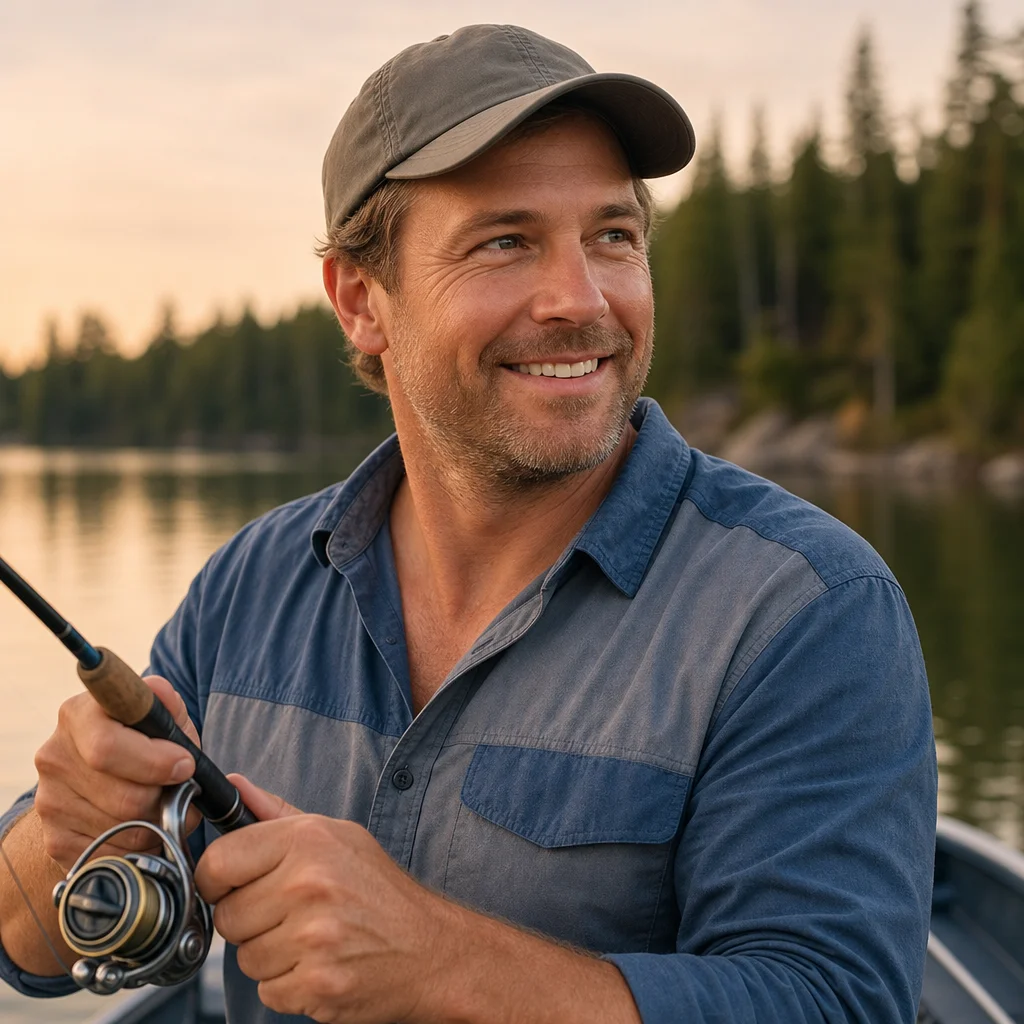
Two anglers can fish from a canoe without turning every cast into a duck-and-cover drill. The trick is to treat the boat as a small shared workspace, not two separate fishing platforms squeezed together.
I’ve found that the best canoe setups are simple: each person has a clear casting lane, only the needed gear is within reach, and both anglers say what they’re about to do before a cast, a move, or a fish comes aboard. A little structure leaves more room for the good part—quiet water, steady casts, and hopefully a bent rod.
Start With Seats, Balance, and Boat Control
In most tandem canoes, the person in the stern has the better position for steering. That makes the stern seat a natural fit for the more experienced paddler, especially on a slow river, in a breeze, or around timber. The bow angler usually gets the cleaner forward view and can cover water ahead of the boat.
That doesn't mean the stern angler is stuck only paddling. It means both people should agree on how the canoe will move before fishing starts.
A useful division of responsibilities is:
- Bow angler: Watches the approach, calls out shallow spots or cover ahead, and fishes forward or to one assigned side.
- Stern angler: Makes steering corrections, manages the boat’s angle, and fishes the opposite side or behind the canoe when the boat is settled.
Keep heavier items near the middle of the canoe and as low as possible. A cooler, tackle bag, anchor, and spare gear placed near the center reduce the tendency for one end to ride high. Avoid piling gear under the bow angler’s feet, where it can interfere with bracing, standing up at a landing, or getting out quickly.
If one paddler is much heavier than the other, shift gear toward the lighter end until the canoe sits reasonably level. A level boat tracks and handles better, which makes casting easier for both people.
Give Each Angler a Casting Lane
The safest and most productive arrangement is usually not for both people to cast in every direction. Assign lanes based on where each person sits and where the canoe is traveling.
On a quiet lake, a straightforward setup is:
- The bow angler fishes from roughly the 10 o’clock to 2 o’clock area ahead of the canoe.
- The stern angler fishes from roughly the 2 o’clock to 6 o’clock area on one side and behind the canoe.
Those clock positions are only a starting point. You can reverse the sides depending on handedness, wind, shoreline structure, or the direction you are drifting. What matters is that the rods aren't routinely sweeping through the other person’s space.
On a slow river, use the current to simplify things. The bow angler can make casts toward likely cover ahead—laydowns, grass edges, shaded banks, and current breaks. The stern angler can cover water already passing alongside or behind the canoe. This keeps the canoe pointed downstream and reduces the need for sudden turns while somebody is mid-cast.
Match lanes to casting style
Casting lanes should account for how each person casts, not just where they sit.
A sidearm caster needs more room beside the canoe. Someone throwing a long overhead cast needs room behind and above them. Fly anglers need the most clearly defined space of all, since the backcast can extend well behind the boat.
When both anglers are using conventional spinning or baitcasting gear, the bow-forward and stern-side/rear arrangement usually works well. If one person is fly fishing, it is often better for the other person to fish less actively, use a short pitch-and-flip presentation, or take turns fishing the prime stretches.
The goal isn't to make every cast identical. It is to make each person’s likely rod path predictable.
Agree on the Words That Prevent Tangles
Good communication in a canoe doesn't need to be formal. A few short calls prevent most close quarters problems.
Useful phrases include:
- “Casting back.”
- “Coming across.”
- “Rod up.”
- “Fish on.”
- “Paddle side.”
- “Drifting into that tree.”
- “Hold still a second.”
Say “casting back” before an overhead cast that reaches behind you, even if you think your partner is well clear. Say “coming across” before switching a lure from one side of the canoe to the other. These small announcements can feel unnecessary for the first few minutes, but they become automatic quickly.
It also helps to establish one simple rule: no sudden stand-up, hard turn, or full-power cast without saying something first. The person in front can't see everything happening behind them, and the person in back can't always see what the bow angler is doing with a rod tip or landing net.
A little verbal coordination is much better than the alternative: hearing a lure whistle past your ear and realizing your fishing partner has a lot more confidence in their aim than you do.
Keep Tackle Minimal and Put It Where It Belongs
A canoe gets crowded faster than expected. Two large tackle bags, several rod tubes, a cooler, lunch, rain gear, landing net, and loose boxes can turn the floor into an obstacle course.
I prefer packing for the water I expect to fish rather than bringing every lure I own. Each angler can carry one small tackle bag or a few utility boxes with a focused selection: topwaters and moving baits for shallow water, a few soft plastics and weights for cover, and a couple of confidence lures for changing conditions.
Store gear in zones:
- Center of the canoe: Heavy shared items, such as a cooler, water, anchor system, or dry bag.
- Under or just ahead of each seat: One compact personal tackle bag, positioned so it won't slide.
- Along the inside hull: Spare rods secured with rod straps, bungee cords, or clips designed for the canoe.
- Easy-to-reach shared spot: Landing net, pliers, fish grips if used, and a small first-aid kit.
Avoid laying spare rods across the thwarts or seats. They are easy to snag with a hook, step on during a landing, or knock overboard when the canoe shifts. If you bring multiple rods, keep only the rods currently in use loose and secure the rest.
Keep hooks covered whenever possible. A lure keeper, hook bonnets, or simply removing a treble-hooked lure from an idle rod can save a lot of trouble in a tight boat.
Decide How You’ll Approach Cover
Most canoe fishing conflicts happen around good-looking structure. Both anglers see the same shady bank or fallen tree, and both want the best angle.
Talk through the approach before you get there. For example: “You take the front edge; I’ll fish the back side after we pass.” Or: “Let’s make one drift along this bank, then turn around and switch sides.”
This approach gives both anglers a chance at quality water without competing for the same two-foot opening under a branch.
Work a shoreline in passes
On a lake shoreline, make a pass parallel to the bank rather than constantly zigzagging toward every target. The bow angler can cast ahead to isolated cover, while the stern angler works the water beside and behind the canoe.
If the wind or shoreline forces you to fish one side more effectively, switch roles on the return pass. The angler who had the outside lane can take the bank side next time.
On a river, resist the urge to spin the canoe toward every target. Frequent turning can put one angler’s casting lane directly into the other’s. Let the current carry you into position, make deliberate corrections, and accept that some targets are better saved for another pass.
Make the Launch Routine Part of the Plan
The trip goes more smoothly when the canoe is loaded and launched in the same order every time. At the ramp or shoreline, load the canoe before either person settles into a seat.
A simple routine looks like this:
- Place heavy gear low and near the center.
- Secure spare rods and make sure loose lures aren't exposed.
- Put paddles where both anglers can reach them immediately.
- Keep personal flotation devices on or readily worn before stepping in.
- Decide who enters first and who will stabilize the canoe.
- Push off only after both anglers are seated and gear is clear of feet and paddles.
At an unimproved bank, the stern angler often holds the canoe steady while the bow angler gets in, then the bow angler braces the canoe while the stern angler steps aboard. The exact order can change with the landing, but the key is to move one person at a time and keep weight low.
Before you launch together: Check the current boating and fishing rules for the lake or river, including required safety equipment, registration requirements, access restrictions, and local fishing regulations. Conditions such as wind, current, water temperature, and weather can also change quickly, so choose a route that matches both anglers’ comfort level.
Handle Fish Without Losing the Boat
Landing a fish is when even an organized canoe can get chaotic. The hooked angler should keep the rod tip clear and say “fish on” early. The other angler’s first job is usually to retrieve their own line and get their rod out of the way.
Once both lines are clear, the unhooked angler can paddle lightly to keep the canoe off shoreline cover or help with the net. If a net is needed, agree on which person will use it before the day starts. In many pairs, the non-hooked angler nets the fish while the hooked angler keeps steady pressure.
Try to land fish from the side of the canoe rather than leaning far over the bow or stern. Keep your hips centered, stay seated when possible, and avoid both people leaning toward the same side at once. A fish is exciting, but it is rarely worth turning a good fishing day into an unexpected swim.
For photos, get the canoe settled first. Stow rods, stop drifting into hazards, and make sure the person holding the camera isn't also trying to balance on a tackle box.
Know When to Take Turns Instead
There are situations where shared casting lanes aren't enough. Tight overhanging brush, narrow creeks, heavy wind, fast current, and technical fly casting can make two active anglers a poor fit for a particular stretch.
In those spots, take turns. One person fishes while the other paddles and manages the boat, then swap after a stretch of bank, a pool, or a set amount of time. This isn't a lesser way to fish. It often puts more lures in productive places than two people trying to cast around each other.
Taking turns is also a good choice when fishing with a newer angler, a child, or someone who is still getting comfortable in a canoe. The experienced paddler can keep the boat positioned while the other person focuses on casting and enjoying the water.
Finish With a Simple System You Can Repeat
A shared canoe works best when both anglers know the plan: bow and stern responsibilities, defined casting lanes, compact gear storage, and a few quick words before a cast or maneuver.
For your next trip, start with one easy rule: the bow angler fishes forward, the stern angler fishes a chosen side and behind, and either person calls out any cast that crosses their usual lane. Pack fewer rods than you think you need, secure the extras, and make one calm practice drift before you start fishing hard.
Once the routine settles in, the canoe stops feeling cramped. It becomes what it ought to be—a quiet, efficient way for two people to reach water that is a little harder to get to and a lot more fun to fish.