How to Share a Small Boat Without Getting in Each Other’s Way
Set casting lanes, gear locations, anchor expectations, and fish-handling routines for a more productive two-person outing.
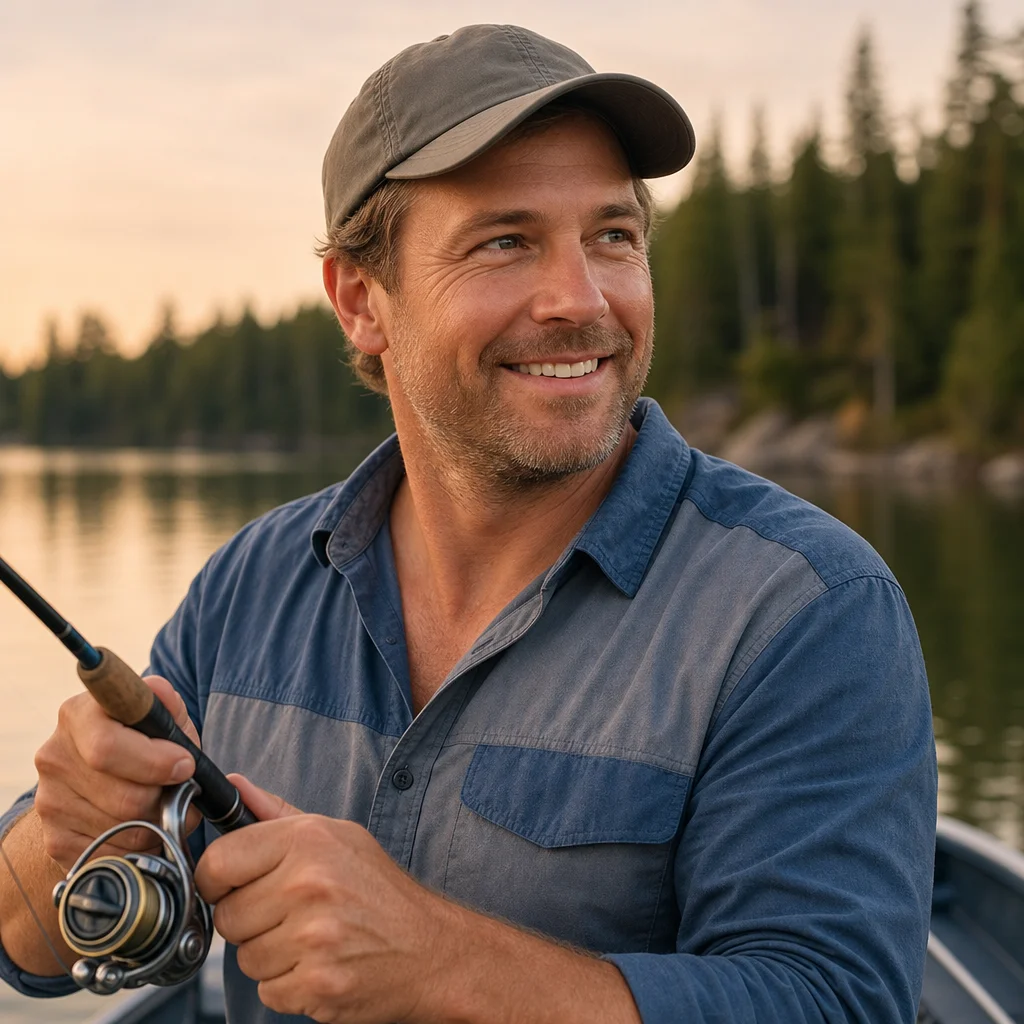
A small boat can be one of the best ways for two people to fish together. It can also feel awfully small when both anglers are casting, changing lures, reaching for gear, and trying to land a fish at the same time.
Most boat tension doesn’t come from somebody doing something wrong. It comes from having no shared plan. A few simple routines—decided before the first cast—make a two-person outing safer, quieter, and a lot more productive.
Decide who fishes which water
The easiest place to start is with casting lanes. In most small boats, one person should primarily fish the water ahead of the boat and the other should cover water to the side or behind it. The exact arrangement depends on the boat, wind, current, and technique, but the important part is making it clear.
On a typical bass boat, jon boat, or small aluminum fishing boat, the person in the bow usually has the cleanest view and the easiest forward casts. That angler can work targets ahead: docks, laydowns, weed edges, shoreline pockets, or points. The person in the stern can fish the opposite side, work deeper water, or make controlled casts behind the boat.
That doesn’t mean the bow angler gets every good target. It means both people know where the other person’s lure is likely to be.
Use a simple lane rule
I like a rule that is easy to remember: don’t cast through the other person’s working area without saying something first.
For example:
- Bow angler fishes from about 10 o’clock to 2 o’clock.
- Stern angler fishes from 2 o’clock around to 10 o’clock.
- Either angler can call out a specific target: “I’m going to make one cast at that stump.”
- When the boat turns, pause for a second and reset the lanes.
This matters most with moving baits. A spinnerbait, crankbait, chatterbait, or swimbait can cover a lot of water quickly and can easily cross another line. When both anglers are throwing slower presentations, such as Texas rigs or finesse worms, the lanes can be more flexible—but they still help prevent tangles.
Match the boat position to the fishing plan
A small boat is constantly moving, even when it seems still. Wind, current, trolling motor corrections, and a drifting anchor line all change casting angles. The person controlling the boat has a real advantage, so it helps to acknowledge that instead of pretending otherwise.
Before you start a stretch of bank or a drift, agree on the plan:
- Are you moving steadily along the shoreline?
- Are you holding on one piece of cover?
- Are you drifting a flat or channel edge?
- Is one person operating the trolling motor while the other fishes?
If one angler is managing the boat, that person should make small adjustments that give both people a chance at good water. The fishing doesn’t need to be perfectly equal cast for cast. It should feel reasonably shared over the course of the day.
Give each spot a pass, then switch sides
When fishing a bank, docks, or a line of cover, the front angler naturally gets first access to the next target. One fair way to handle this is to switch positions after a stretch of shoreline, a group of docks, or a set amount of time.
Another option is to make a second pass from the opposite direction when conditions allow. The fish may see a different presentation, and the other angler gets the better casting angle.
For families, this is especially useful when introducing a child or a newer angler to boat fishing. Put them in the position that gives them the simplest casts and the clearest shot at targets. There will be plenty of time to settle the bow-versus-stern debate after everyone has caught a few fish.
Assign a home for every piece of gear
Loose tackle is what makes a small boat feel smaller. A couple of tackle bags, spare rods, a cooler, rain gear, and a landing net can turn the floor into an obstacle course in a hurry.
The solution is less about having a fancy storage system and more about giving every item a home.
Keep the center aisle clear
If your boat has a walk-through area, open floor, or narrow path between seats, treat it as a no-storage zone. That space is needed when somebody stands up, changes position, grabs the net, or moves to help land a fish.
Store gear along the sides, under seats, or in designated compartments. Keep the items you’ll use often—pliers, line cutters, a measuring board, and a small tackle tray—within reach without leaving them underfoot.
A practical two-person setup might look like this:
- Each angler keeps one small tackle bag or tray at their station.
- Extra tackle stays stowed until it is needed.
- Rods not being used lie flat and parallel to the gunwale, with handles and tips arranged to avoid crossing.
- The landing net has one known location.
- The cooler stays where it won’t block foot traffic or access to safety gear.
Try to bring fewer rods than you think you need. I know that is easier said than done. Still, four carefully chosen rods per person are usually easier to manage than eight rods each leaning in every direction.
Talk through anchor and drift expectations
Anchoring can create friction fast if one person expects to fish a spot thoroughly while the other is ready to keep moving. Make that decision before the anchor goes overboard.
Agree on a rough stopping rule. You might decide to fish a spot for 15 minutes, make a certain number of casts, or stay until the bite slows. The exact rule matters less than both people having the same expectation.
If you are drifting, decide who is watching boat position. On a small boat, a productive drift can be ruined when everyone is focused on their lure and nobody notices the wind pushing the boat too shallow, too deep, or into another angler’s line.
The person running the trolling motor or handling the anchor should say what they are doing before making a major change:
- “I’m going to ease us closer to that grass edge.”
- “Let’s drift this point one more time.”
- “I’m pulling the anchor so we can try the next pocket.”
That short bit of communication prevents surprise movements, crossed lines, and the occasional awkward mid-cast lurch.
Check the rules for where you’re fishing
Before launching, confirm the current boating, anchoring, personal flotation device, and fishing-access rules for the water you plan to fish. Requirements can vary by state, boat type, and location, and local conditions may affect where you can safely anchor or drift.
Set a fish-handling routine before the first bite
When somebody hooks a good fish, the boat can get crowded very quickly. The best time to decide who grabs the net isn't while a fish is making its third run under the boat.
For most two-person trips, designate one angler as the net person whenever the other has a fish on. The angler fighting the fish should keep the rod tip away from the other person, communicate which side the fish is on, and avoid trying to rush the fish into the net.
The net person should:
- Clear nearby rods or loose line if needed.
- Keep the net low and ready rather than waving it over the water too early.
- Let the fish come within reach before making the scoop.
- Avoid chasing the fish with the net, which often makes the fish turn away.
Once the fish is aboard, follow the same routine each time. Unhook it, measure it if desired, take a quick photo, and release it or place it in the livewell according to your plan. Keeping pliers, a measuring device, and camera or phone accessible makes this smoother.
If you are keeping fish, decide in advance who handles the cooler or livewell and who gets back to fishing. A consistent routine keeps hooks, slime, and open tackle trays from spreading across the boat.
Make line and rod safety part of the routine
Small boats put people close together, and fishing hooks aren't forgiving. Before each cast, take a quick glance behind and beside you. This is particularly important with long rods, treble-hook lures, heavy weights, and overhead casts.
A few habits go a long way:
- Announce a cast when space is tight: “Casting back.”
- Keep rod tips low when passing another person.
- Point hooks away from people when changing lures.
- Don’t leave a lure dangling at face level.
- Secure rods before moving the boat at speed.
- Put sharp tools back in their assigned place when finished.
These aren’t complicated rules, but they become more important when the wind picks up, the boat rocks, or a child gets excited about a fish.
Share the good water without keeping score
Fishing with another person works best when both anglers want the day to go well, not just their own catch count. That can mean giving your partner the better cast at a visible fish, switching spots after one person has been struggling, or slowing down when the other person needs time to retie.
It also means recognizing different goals. One person may want to cover water and find active fish. Another may be happy working a dock line slowly or learning a new bait. Talk about that before leaving the ramp.
If one angler is more experienced, avoid taking over every decision. Offer clear suggestions, but leave room for the other person to choose a lure, make casts, and learn from what happens. A missed fish is usually more memorable as a shared laugh than as a coaching session nobody asked for.
Build a quick pre-launch agreement
You don’t need a formal meeting in the parking lot. A one-minute conversation can cover nearly everything that causes trouble later.
Before launching, decide:
- Who starts in the bow and who starts in the stern.
- Which casting lanes each person will use.
- Where each person’s tackle, rods, and drinks will go.
- Who operates the boat, anchor, or trolling motor first.
- Who grabs the net when a fish is hooked.
- When you will switch positions or fish a second pass.
- What each person hopes to get from the trip.
Then be willing to adjust. If the wind changes, the bite moves deeper, or one position clearly has the better angle, change the setup without making it a big deal.
A small boat will never have unlimited space, but it doesn’t need it. Clear lanes, organized gear, a shared plan for boat control, and a predictable fish-handling routine make room for both anglers. Start with those basics, talk through changes as they happen, and you can spend more time fishing instead of untangling lines—or each other.