Where Should I Cast From a New Bank-Fishing Spot?
A practical, beginner-friendly method for choosing a productive casting position from an unfamiliar freshwater bank-fishing spot.
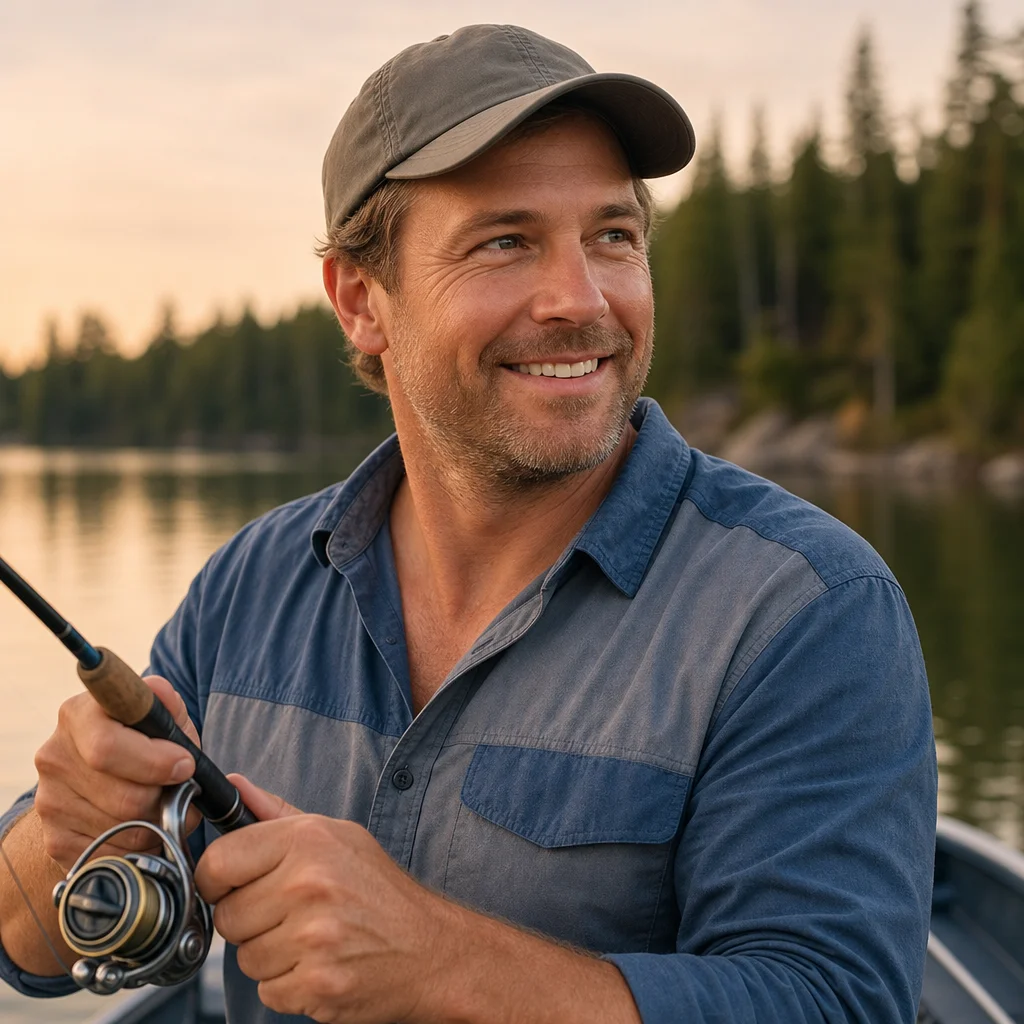
The hardest part of arriving at unfamiliar water is often deciding where to begin. A shoreline can look wide open, but fish rarely use every foot of it the same way. Rather than firing casts at random, I take a few minutes to look for places that offer fish food, cover, a comfortable depth, or an easy travel route.
You don't need a boat, electronics, or a perfect read of the water. From the bank, the goal is simpler: identify the best-looking water you can reach, make deliberate casts through it, and let the response tell you what to try next.
Start by looking before you walk to the edge
Pause a few steps back from the bank. This gives you a wider view and helps keep you from casting a shadow or stomping right onto shallow fish near shore.
Scan both directions and look for changes. On most lakes, ponds, rivers, and creeks, the best starting areas aren't necessarily the prettiest or easiest places to stand. They are spots where one type of water meets another:
- Shallow water next to deeper water
- Calm water next to current
- Open bottom next to weeds, wood, rocks, or docks
- A hard bank that drops off beside a flatter shoreline
- Clear water meeting stained or muddy water
Fish use these transitions because they provide options. They can rest, feed, hide, or move between depths without traveling far.
Find a bank position that gives you several casting angles
Don't choose a casting spot solely because it has a clean, flat place to stand. Good footing matters, but a productive position also lets you cover more than one direction.
I like a bank position that allows me to cast:
- Parallel to the shoreline. This keeps a lure in shallow cover, along a weed edge, or beside a drop-off for a longer distance.
- Out toward deeper water. This helps check the water away from the bank, especially where the bottom may fall away quickly.
- Across a feature. A cast that crosses a point, current seam, channel edge, or patch of cover can reveal where fish are positioned.
Standing at the end of a small point, beside a creek-mouth corner, or near the outside edge of a bend often gives you these angles. If you can only cast straight into featureless water, keep walking and looking.
Look for depth clues from shore
You usually can't see the exact bottom contour from the bank, but the shoreline often offers hints.
Steep banks often mean deeper water nearby
A high, rocky, or sharply sloped bank may continue underwater. That doesn't guarantee fish, but it can put deeper water within casting range. This is especially useful when fish aren't holding in the shallows.
Cast along the base of the steep bank first. Then cast outward at a slight angle and pay attention to when your lure begins touching bottom. A sudden change in bottom contact can suggest a drop or ledge.
Gradual banks usually mean broad shallows
A gently sloping, muddy, sandy, or grassy shore often extends gradually into the water. These areas can be excellent when fish are feeding shallow, particularly around vegetation, shade, or small inflowing water.
The catch is that a gradual flat can be vast. Instead of covering it blindly, look for one added feature: a weed line, a darker bottom patch, a stick, a culvert, a dock, or a slight depression.
Water color can reveal changes
Darker water sometimes indicates depth, shade, vegetation, or a darker bottom. Lighter water can indicate shallows, sand, rock, or silt. It is only a clue, not a map, but it can help you narrow your first few casts.
Polarized sunglasses are one of the most helpful tools for reading bank water. They reduce surface glare and can reveal rocks, grass, wood, bottom changes, and fish that would otherwise be invisible.
Prioritize cover, but fish the edges of it
Beginners often cast directly into the middle of every visible bush, log, or weed bed. That can work, but the most reliable target is often the edge.
Fish commonly sit where they can move quickly between cover and open water. Focus on:
- The outside edge of a weed bed
- Open pockets within vegetation
- The shaded side of a dock or overhanging tree
- The downstream side of a boulder, log, or bridge support
- The end of a fallen tree where its branches reach deeper water
- The line where riprap meets a softer bottom
Make your first cast past the cover if you can. Retrieve the lure alongside it rather than pulling it straight away from the target. A bass, crappie, sunfish, or other predator has more time to notice a bait that travels along its holding area.
In moving water, read the current before casting
On rivers and streams, current is as important as cover. Fish generally avoid spending unnecessary energy in the strongest flow. They look for places where they can rest while food moves within reach.
Start by identifying current breaks:
- The calm pocket behind a large rock
- The softer water behind a fallen tree or bridge pier
- An eddy where water curls back upstream
- The seam between fast and slow water
- The inside edge of a bend, where current is often gentler
- A deeper-looking run below a riffle
Cast slightly upstream or across the current so your bait enters the likely holding zone naturally. Let a jig, worm, small spinner, or other presentation move with the flow when that fits the lure and the species you are targeting.
Avoid casting only into the fastest visible water. Some fish feed there, but the softer edge beside it is often the more sensible first target.
Use shoreline structure as a map
The land around the water can point toward productive water below the surface.
A point of land extending into a lake may continue underwater as a point or ridge. A small cove may offer protected shallows. A creek entering a pond or lake can bring cooler or warmer water depending on conditions, along with food and current. A bridge, culvert, retaining wall, or row of riprap creates hard structure that fish may use.
When I find one of these features, I don't make one cast and leave. I work it from several directions. A fish may be holding on the shallow side, the deep side, the windy side, or the shaded side of the same feature.
Let wind and shade help make the choice
Wind can make casting unpleasant, but it can also improve a bank-fishing area. Wind pushes surface food and can stir up forage along a shoreline. A windblown bank with reachable cover, a point, or a weed edge is often worth trying.
Shade matters too, especially when the sun is bright. Look under overhanging trees, beside docks, along bluff shadows, and on the shaded side of vegetation. In clear water, shade can make fish feel less exposed.
That said, don't treat wind or shade as automatic answers. If a shaded bank is shallow and empty while a sunny bank has a deep weed edge or a current break, the stronger structural feature may be the better choice.
Make your first casts count
Once you choose a spot, use a simple casting sequence instead of repeatedly throwing to the same place.
Cast 1: Work the shoreline edge
Make a cast parallel to the bank, close to visible cover or the edge of a weed line. This checks for fish feeding or holding in the near-shore zone.
Cast 2: Probe outward
Cast perpendicular to the bank toward deeper water. Let the lure sink if appropriate, and pay attention to the bottom, weeds, rocks, or sudden loss of contact.
Cast 3: Cross the transition
Cast at an angle so the lure travels from shallow to deep, deep to shallow, or across the edge of current or cover. This is often the cast that finds the actual holding line.
Cast 4: Change the retrieve before changing locations
If the target looks right but you get no strike, slow down, pause longer, or use a slightly different depth. A fish may be present but unwilling to chase a fast-moving lure.
After a handful of thoughtful casts, move on if you have covered the available angles. Bank fishing rewards mobility. Walking 30 yards to reach a new angle can be more productive than making 30 more casts from the same footprint.
Learn from what your lure tells you
Every retrieve gives you information, even without a bite.
If your lure quickly hangs in weeds, you have found vegetation. Try the outer edge, a gap, or a more weed-resistant presentation. If it bumps hard bottom near shore, work that change carefully. If it swings in current, you have learned where the faster flow begins. If you feel soft mud, gravel, rock, or wood, remember where it happened.
A small notebook or note on your phone can help. Record simple observations such as “bite beside shady dock in three feet of water” or “rocks started one cast length out.” Over time, these details make unfamiliar water feel less mysterious.
Keep access and safety part of the decision
The best-looking target isn't worth reaching through unstable footing, private property, or unsafe water. Choose a spot where you can cast and retrieve without slipping, snagging people behind you, or standing too close to a steep drop-off.
Check the water and access where you plan to fish
Confirm that shore access is allowed, watch for posted rules and changing water conditions, and check local fishing regulations for required licenses, seasons, species rules, and harvest limits. Current, water releases, and slippery banks can change quickly, especially around rivers, dams, and spillways.
A simple rule for unfamiliar banks
When you first arrive, don't ask, “Where can I make the longest cast?” Ask, “Where can a fish hide, feed, and move without going far?”
Start with the nearest combination of depth, cover, current change, shade, or windblown shoreline. Fish it from multiple angles. Pay attention to what your lure contacts and where bites happen. Then move to the next meaningful feature rather than guessing at random.
That habit turns a new bank-fishing spot into a series of manageable decisions—and it gives your first cast a much better chance of being the right one.