How to Fish Safely During Summer Thunderstorms
A practical guide to recognizing thunderstorm danger, getting off the water early, and making safer decisions when summer weather changes fast.
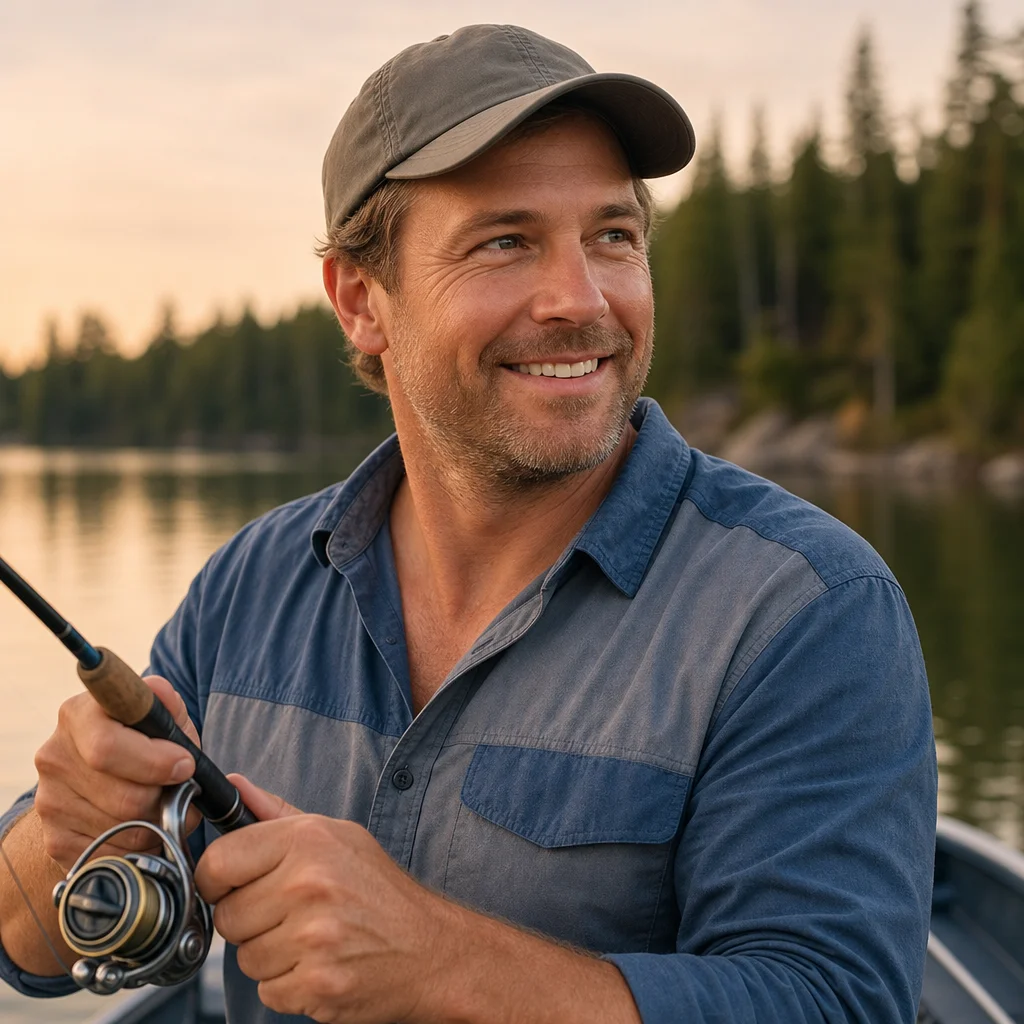
Summer fishing often means hot mornings, humid afternoons, and storms that can build faster than a bite dies. I treat thunderstorm safety as a go/no-go decision, not something to manage from the bow of a boat or under a lakeside tree.
The hard part is that storms don't always arrive as a dramatic wall of black clouds. A pleasant afternoon can turn into lightning, hard wind, and rough water in a short stretch of time. Having a simple plan before I launch or cast makes the decision much easier when conditions start changing.
Make the weather check part of the trip plan
A forecast is useful, but it is only the first layer of planning. Before heading out, I look at the hourly forecast, the chance and timing of thunderstorms, wind direction and speed, and any active weather alerts. In summer, phrases such as “scattered thunderstorms” deserve attention, especially on a large lake, reservoir, or coastal water where getting back to shelter takes time.
I also consider the water I am fishing:
- Small ponds and short bank-fishing trips may offer quick access to a vehicle or substantial building, but exposed shoreline is still a poor place to wait out lightning.
- Large lakes and rivers require more margin because a storm can create dangerous waves or wind before lightning reaches me.
- Kayaks, canoes, and small boats are especially vulnerable to wind and rough water. They don't provide lightning protection.
- Remote waters demand a more conservative decision. If there is no nearby safe shelter, I avoid fishing when thunderstorms are expected nearby.
It helps to identify a real destination for bad weather before launching. A vehicle with a hard metal roof and the windows up can provide meaningful lightning protection. A fully enclosed, substantial building is better. An open-sided pavilion, tent, dock shelter, portable fishing shelter, or small boat isn't a safe lightning shelter.
Check the conditions you’ll be fishing under
Before leaving home and again at the launch, check the National Weather Service forecast, radar, and active alerts for your exact fishing area. Weather alerts, storm timing, wind forecasts, and access conditions can change quickly. If thunderstorm potential overlaps your trip and you can't reach a substantial building or enclosed vehicle quickly, choose another time or location.
Know the signs that mean it is time to leave
The simplest rule is the most important one: if I can hear thunder, I am already close enough to be struck by lightning. I don't wait for rain, visible lightning, or a dark cloud directly overhead.
Lightning can strike well away from the heaviest rain. Blue sky in one direction doesn't make an exposed spot safe when thunder is audible. The goal is to be inside a safe shelter before the storm is on top of me.
Other signs can give an earlier warning that it is time to pack up and head in:
- Building, towering clouds that grow vertically, especially with a dark or flattened-looking base
- A sudden increase in wind or a noticeable wind shift
- Distant thunder, even if it seems faint
- A rapid temperature drop or gusty, cool outflow wind
- Whitecaps beginning to form on open water
- A weather alert on a phone, marine radio, or weather radio
The weather doesn't need to look severe for the situation to be dangerous. Lightning is enough reason to end the fishing portion of the trip. Strong wind and rough water add a separate problem: they can make the route to shore unsafe or slow.
Get off exposed water before the storm arrives
When thunder is heard, the priority is to leave the water and reach safe shelter. I would rather lose the last hour of a good bite than gamble on a storm that may pass “just to the north.” Fish will still be there later.
If you are in a boat
Head for the nearest safe shore or marina while conditions are still manageable. Don't try to beat a storm by crossing the widest part of a lake to get back to the original ramp. A closer protected landing, marina, or dock with access to a substantial building may be the better choice.
Operate at a speed appropriate for the water conditions, visibility, and your boat. Keep everyone wearing a properly fitted life jacket while underway. Sudden wind can turn a manageable chop into steep, closely spaced waves, particularly on broad reservoirs and open lakes.
Once ashore, move away from the water and into a safe building or enclosed vehicle. Don't stay on the dock to secure gear, continue casting from the ramp, or wait in an open boat. Equipment can be replaced; people are harder to come by.
If strong wind arrives before you can reach shore, focus on keeping the boat under control and getting to the nearest safe landing as conditions allow. Avoid standing unnecessarily, and make sure passengers have life jackets on. A boat remains an exposed, unsafe place during lightning, so the right answer is to make conservative decisions early enough that this scenario is less likely.
If you are fishing from shore
Leave the bank, pier, jetty, dam, or wading area as soon as thunder is heard. Shore anglers are often tempted to make “one more cast” because the truck is nearby. That is exactly the kind of delay that puts someone out in the open at the wrong time.
Don't shelter under a lone tree, a small lean-to, a picnic pavilion, a fishing dock roof, or a pop-up canopy. Avoid open fields, high ground, fence lines, and isolated tall objects. Move to a substantial building or enclosed vehicle instead.
If you are wading, get out of the water promptly and head toward shelter. Wet ground and shallow water aren't places to linger during a lightning threat.
Put rods away, but don't let gear delay you
Fishing rods, nets, landing tools, and boat rails can make us taller or keep us occupied in an exposed place. Put rods down and move away from the water when thunder starts. There is no need to debate whether a graphite rod, aluminum boat, or metal railing “attracts” lightning; the practical issue is exposure. An angler holding a long rod on open water or an open bank is in a bad location during a lightning storm.
That said, I don't spend extra time carefully stowing every rod, folding every chair, or organizing every tackle tray while a storm approaches. If gear can be secured quickly without delaying departure, fine. If not, leave it and get to shelter.
For boaters, a little organization before the trip makes a fast exit easier:
- Keep loose tackle and bags secured before the weather turns.
- Know where life jackets are and make them easy to reach.
- Keep a charged phone in a dry case.
- Carry a VHF radio or other communication option where appropriate for the water.
- Tell someone where you are fishing and when you expect to return.
- Save maps or navigation information for waters with poor cell service.
Wait long enough after the last thunder
Storms can seem finished while lightning is still possible. Rain stopping isn't the all-clear, and a bright patch of sky isn't either. Wait in a substantial building or enclosed vehicle until at least 30 minutes have passed since you last heard thunder.
If thunder starts again, restart the waiting period. This can feel overly cautious when the bite was good, but the delay is usually shorter than dealing with a dangerous situation on the water.
Use the waiting time to check radar, alerts, and the route back out. In summer, one thunderstorm can be followed by another. If storms are continuing to develop along your route or over the water, call the trip done for the day.
Don't rely on unsafe lightning myths
A few common ideas can encourage anglers to stay out too long:
“The storm is still miles away.”
If you hear thunder, lightning is close enough to be a threat. Distance estimates based on counting seconds between flash and thunder may be interesting, but they shouldn't replace the simple decision to seek shelter immediately.
“I will be safe under the dock roof.”
Open structures don't provide the protection of a substantial enclosed building or enclosed vehicle. A roof alone isn't enough.
“The boat has a cabin, so we are fine.”
A small boat cabin isn't automatically a safe lightning shelter. Avoid treating any boat as a substitute for getting ashore and into a properly enclosed structure or vehicle.
“I can crouch down and wait it out.”
There is no safe crouching position outdoors during lightning. The safer choice is to get inside an appropriate shelter before the storm reaches you.
If someone may have been struck by lightning
Lightning-strike victims don't carry an electrical charge, so it is safe to touch them and provide aid. Call 911 immediately. If the person is unresponsive and not breathing normally, begin CPR if you are trained and it is safe to do so, and use an automated external defibrillator (AED) if one is available.
Lightning injuries can be serious even when the person seems alert afterward. Everyone struck by lightning needs prompt medical evaluation.
Build a simple storm decision rule
The best storm plan is one you can follow without negotiating with yourself. Mine would be simple:
- Check the hourly forecast, radar, wind, and alerts before leaving.
- Identify a substantial building or enclosed vehicle before fishing.
- Watch the sky and water while fishing, not just the line.
- At the first sound of thunder, stop fishing and move to shelter.
- Wait at least 30 minutes after the last thunder before returning.
- End the trip if storms keep rebuilding or the water is no longer safe.
Summer storms are part of fishing in much of the United States, but they don't have to turn a good outing into a bad decision. Leave early, use real shelter, and be willing to call it a day. The next calm morning is a much better time to chase the ones that got away.